

Trucks and Fins is a huge present to the whole skate community - not just for the skating people, but also for shops, builders and schools. Super easy to use and can't believe how complete it is.
Pascal Lieleg aka Official Bowlshit
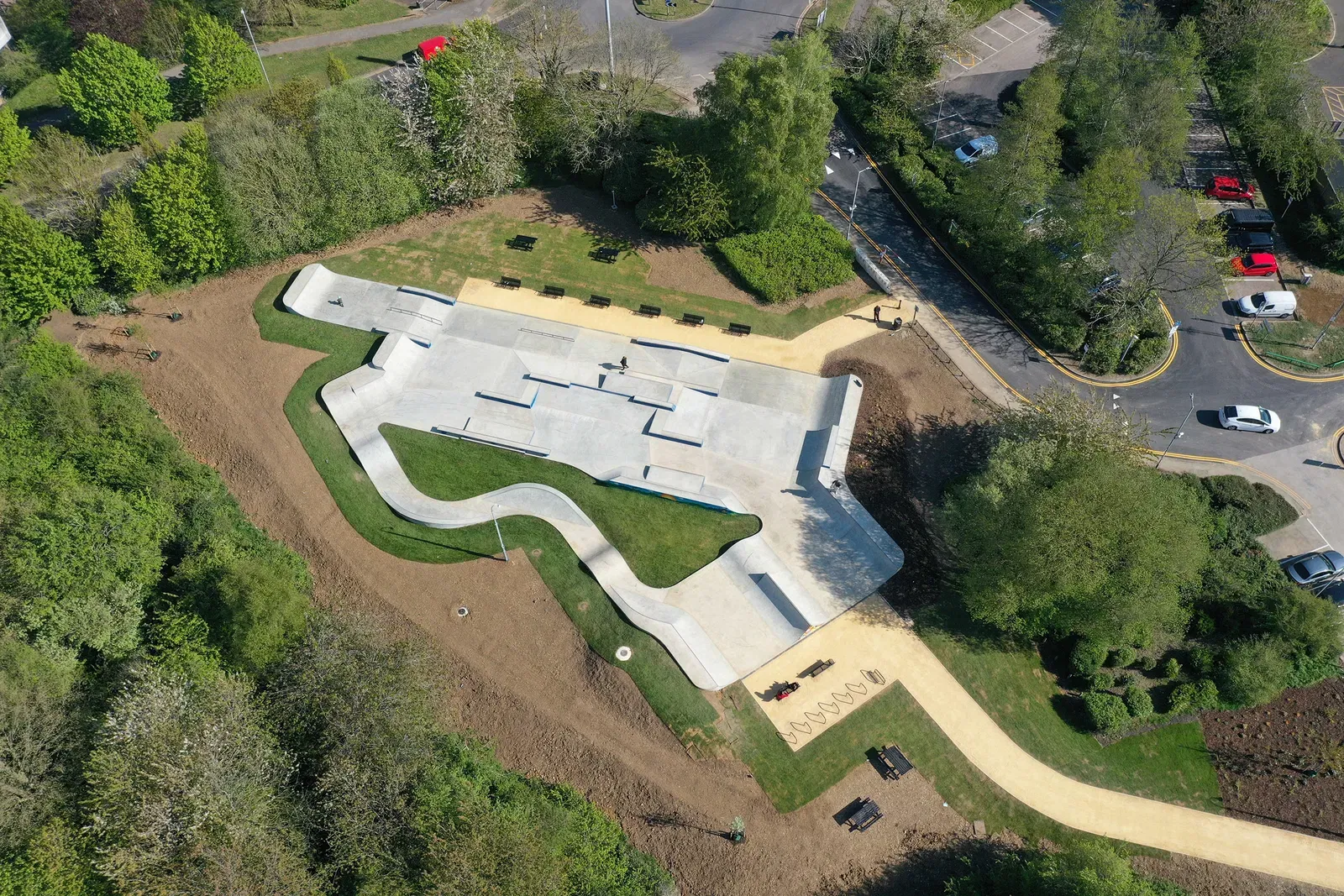
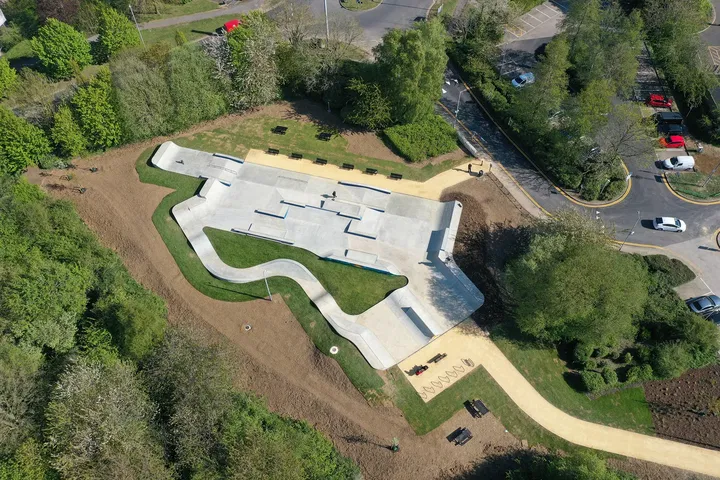
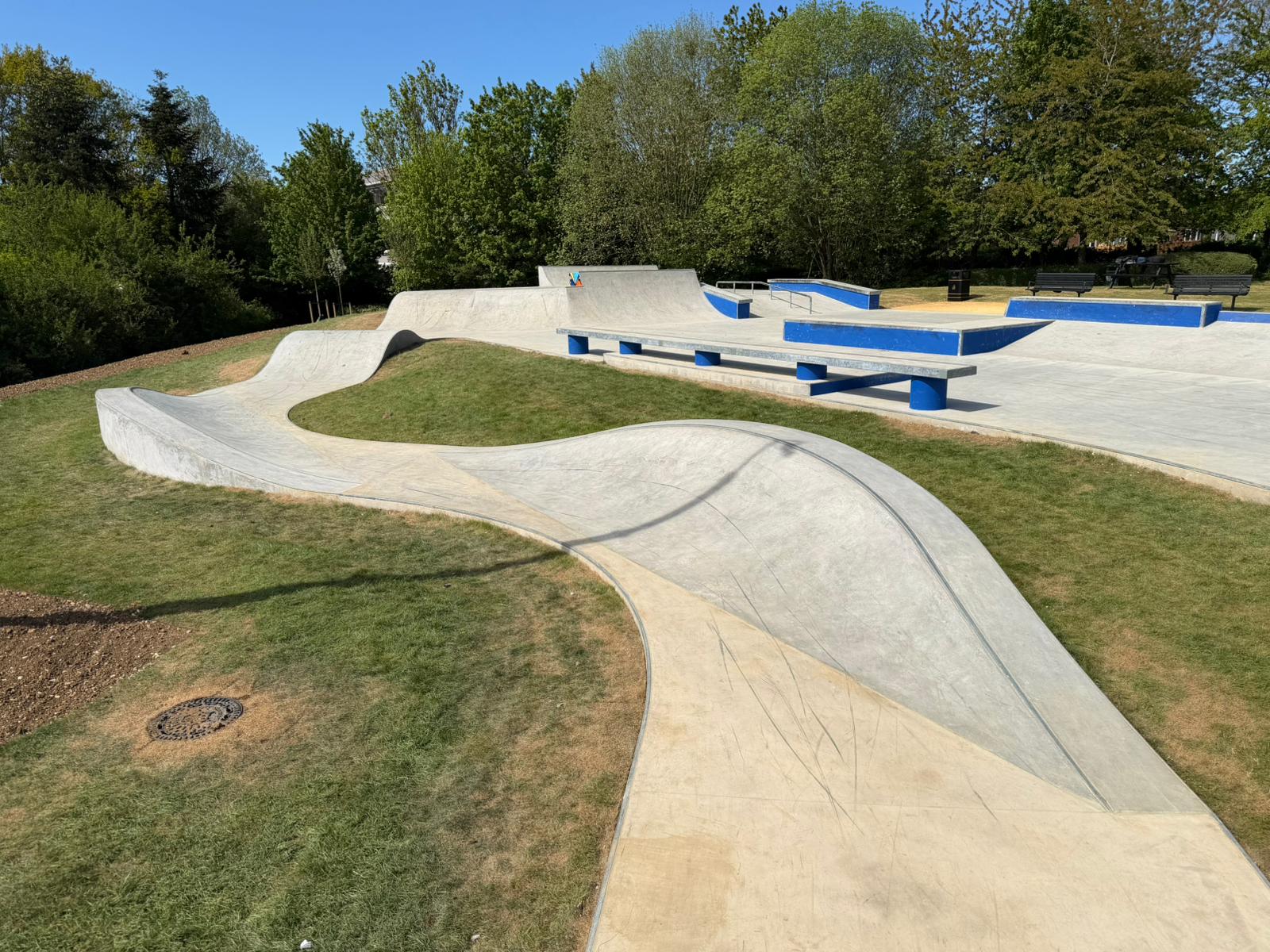
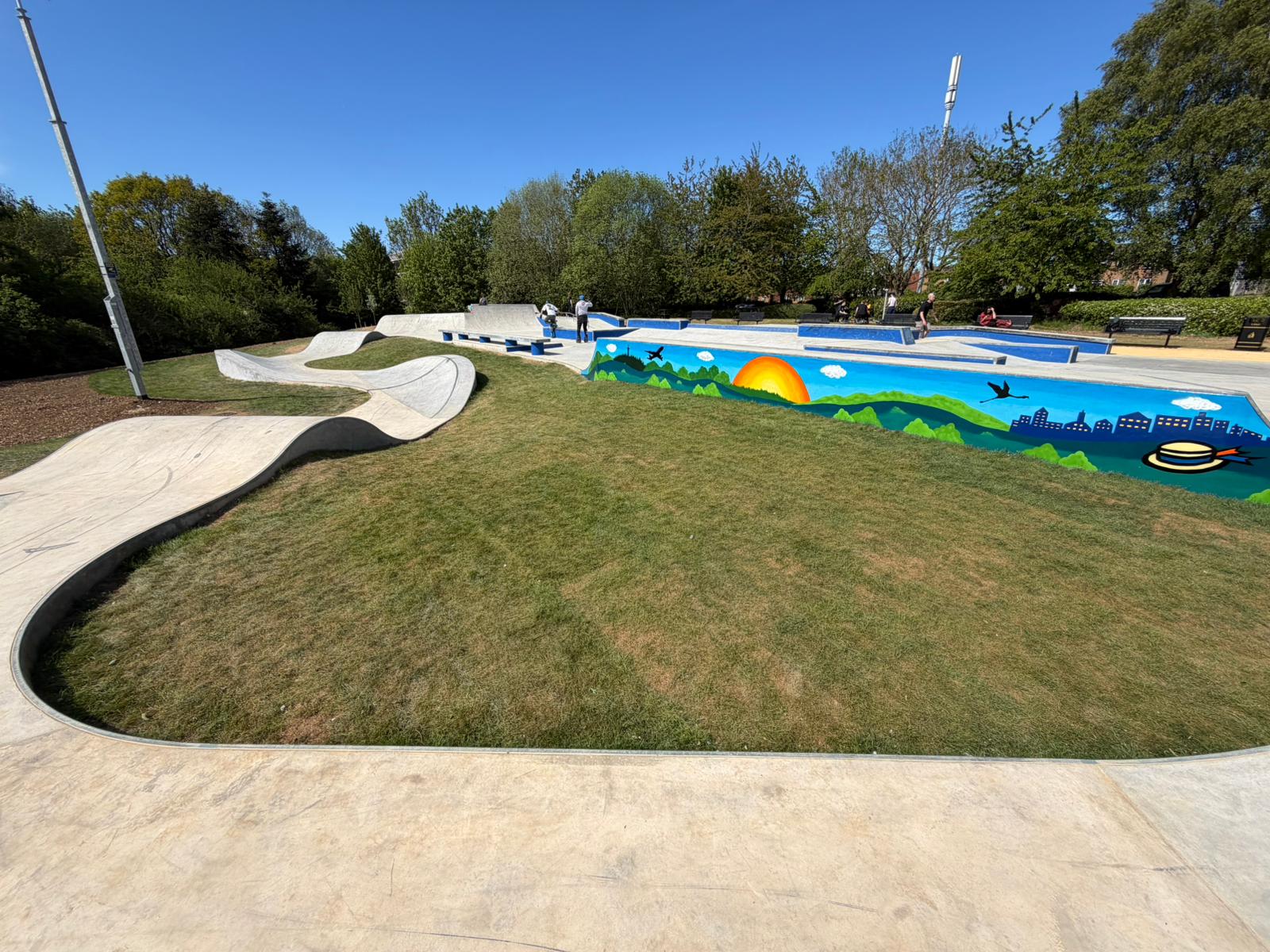
The new park at Wigmore Valley Park in Luton was, in the truest sense, years in the making — close to a decade from the first community request to the first roll on fresh concrete. Its predecessor was a local favourite, but time and wear had caught up with it. What's taken its place is far more ambitious: a multi-discipline space for skaters, BMX riders and scooter riders of every ability, weaving a mini ramp, a snake run pumptrack and a central plaza into one facility that flows together when it's quiet and splits into independent zones when it's packed.
But Wigmore is as much a story about people as it is about concrete. The campaign to replace the ageing park was led by local skater Kiersten Gaughan, who'd been travelling further afield with her younger brother Sonny just to find somewhere decent to ride. When the park finally opened with a packed-out jam, she got to session her hometown park at last — alongside hundreds of riders sharing what the space meant to them.
We sent some questions to Sam Reynolds of Maverick Skateparks, the team behind the build, to talk through the ten-year journey, the design thinking that makes the park work for everyone at once, and where UK skatepark design heads next.
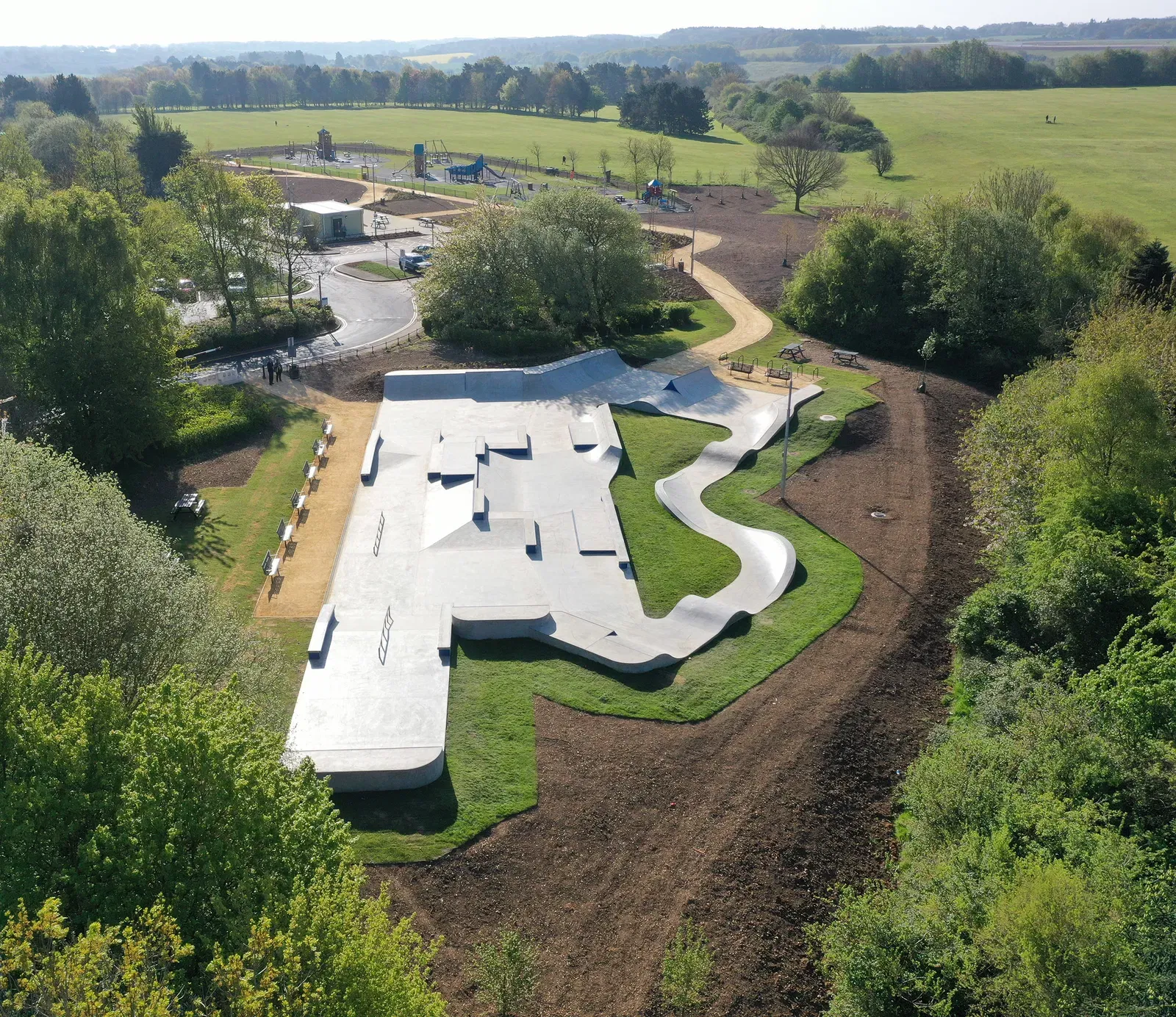
We have been working with the community and the team at Luton Rising on the delivery of a new skatepark in Wigmore Valley Park for close to ten years. The previous skatepark was well-loved by the locals but had come to the end of its serviceable life. It was important to us to provide the riding community with an exciting, modern space where the new generation can learn while also challenging the current users.
Our design includes a comprehensive variety of features to serve the needs of skateboarders, BMX and scooter riders of all abilities and ages. The facility is split into three seemingly separate yet joined up spaces, the mini ramp, the snake run pumptrack, and at the heart of the facility, a plaza. All routes around the skatepark are designed to link up when the facility is quiet, conversely, they can be used as separate, independent areas when the park is busy. Subtly segregating the space into different zones enables larger numbers of people to use the space at the same time, safely. This is a spacious, open design which gives riders the luxury of being able to roll through the park without the worry of collisions.
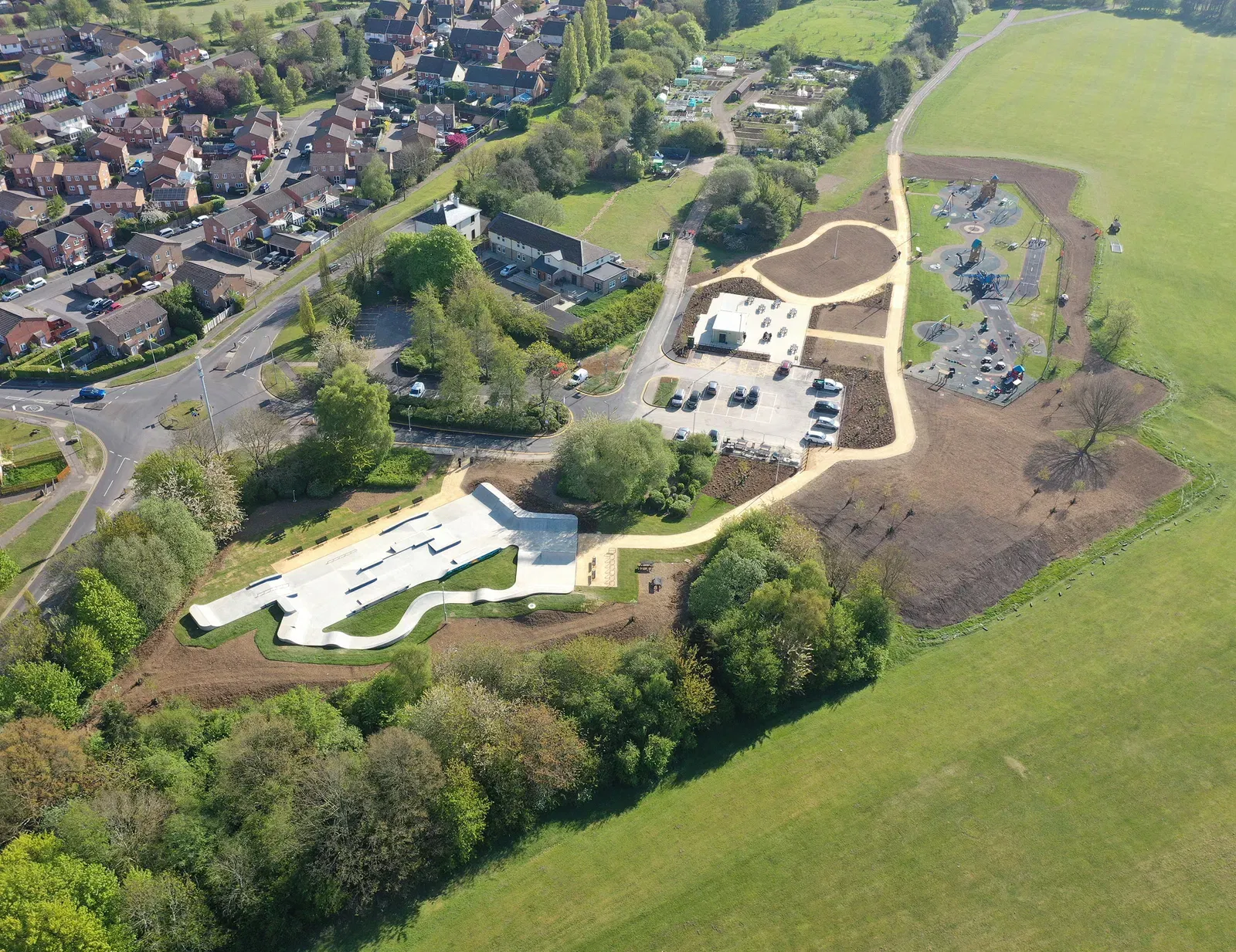
The build process is a balance of precision and adaptability. Wigmore’s build programme was an 18-week construction period covering engineered setting out, drainage and groundworks, concrete construction, RoSPA inspection and final handover.
The main challenge at Wigmore was the existing services running through the site, and a complex drainage strategy. The team work from detailed construction drawings, but every level and dimension is checked on site with daily progress reports. Quality control is always a big part of the build.
Local skater Kiersten Gaughan led the campaign to improve the Wigmore Valley Skatepark because she was forced to travel further afield with her younger brother Sonny to find adequate facilities. It was a real highlight at the opening to see Kiersten finally skate the new park in her hometown, alongside the hundreds of riders telling their stories about what this space means to them.
We are currently working across three sites in Surrey, Buckinghamshire and Devon to bring you new spaces to session over the summer holidays.
We hope to continue our work to push the boundaries of UK skatepark design by moving beyond basic youth provision to long-term, inclusive, community-centred public spaces. Not just a set of ramps, but durable civic infrastructure that supports all wheeled disciplines, creativity, social connection, accessibility and local identity.
Join the Trucks and Fins community and receive exclusive news, giveaways, access to subscribers-only
-contests, discounts from our partners and much more directly from us!

Trucks and Fins is a huge present to the whole skate community - not just for the skating people, but also for shops, builders and schools. Super easy to use and can't believe how complete it is.
Pascal Lieleg aka Official Bowlshit

Trucks and Fins is a great resource for checking on local spots if you are traveling or planning a road trip! A one stop resource that is constantly updated with the newest projects as well as those bucket list locations worldwide. The intuitive UI features gps coordinates as well as useful information about shops nearby.
Architect Betonlandschaften

Our skate community has been crying out for a comprehensive guide to global skate spots. Trucks and Fins should be commended on their dedication to mapping the world's STOKE!
Maverick Skateparks

Trucks and Fins brings all of the world's skateparks to you all in one convenient place through their endless search for parks around the world. They have park locations, details, images, and more to help plan your next skate quest wherever that may take you. We appreciate their dedication and passion for skateboarding and the amazing gifts that skateparks and skate spots are.
Steve Zanco, Skatepark Respect

A big part of skateboarding is about finding Animal Chin - your spirit animal, or in other words: whatever gets you stoked. Could be the right people to roll with, or that special dream terrain. Trucks and Fins has all the best skate destinations in one place; a map of stoke in your hands.
Jan Kliewer, Yamato Living Ramps
