
Trucks and Fins is a huge present to the whole skate community - not just for the skating people, but also for shops, builders and schools. Super easy to use and can't believe how complete it is.
Pascal Lieleg aka Official Bowlshit
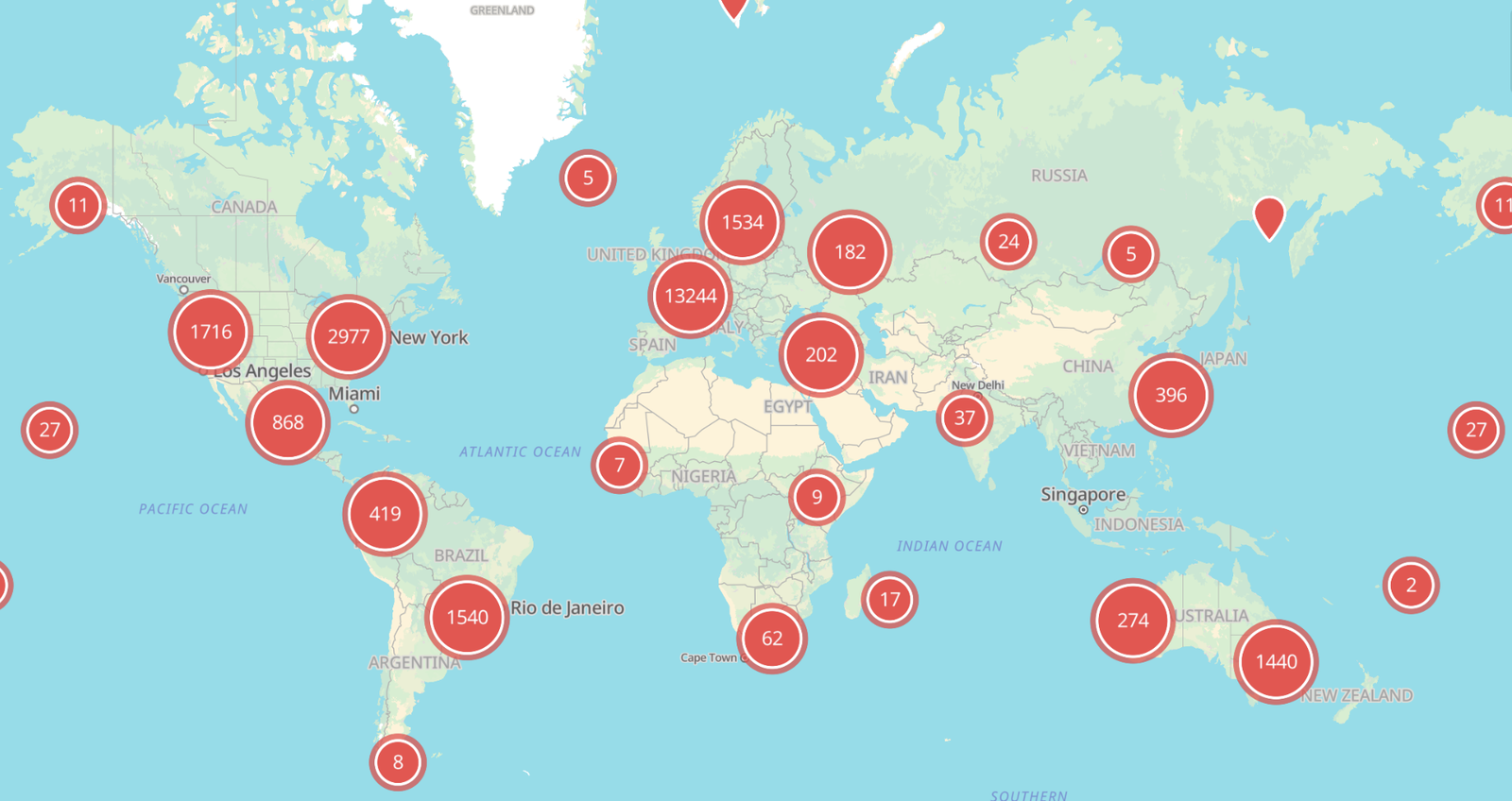
The world of skateboarding is bigger than ever, and for the first time, we can quantify exactly how big. As of our January 2026 update, our global map now tracks 25,008 skateparks and pumptracks worldwide.
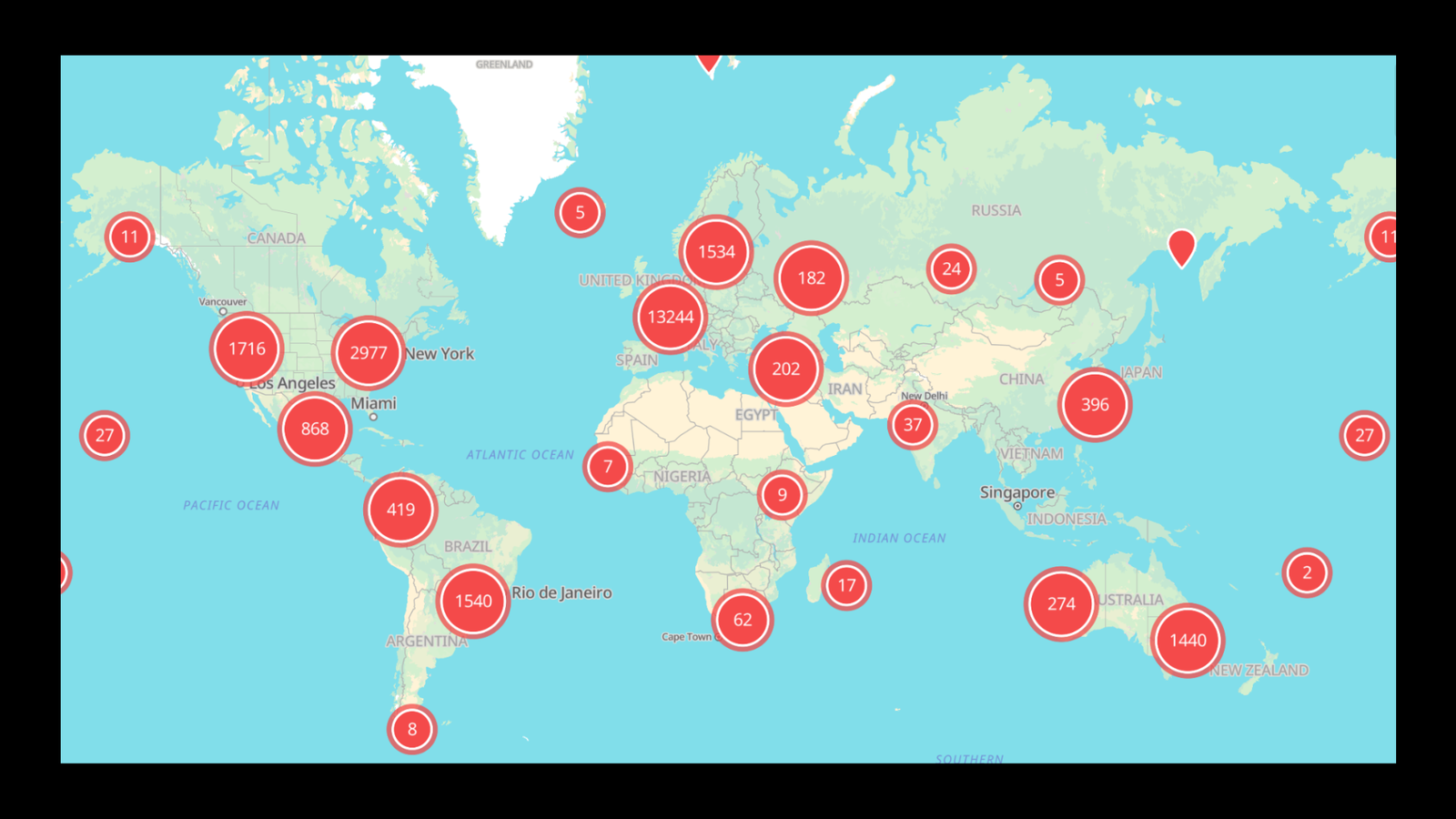
This isn't just a number—it’s a testament to the global explosion of action sports infrastructure. From the concrete bowls of California to the asphalt pumptracks of the Swiss Alps, the map reveals a shifting landscape where accessibility and quality are finally catching up to demand.
Our new visual breaks down the "Top 15" nations that form the backbone of the global skate scene. While our map tracks locations in over 100 territories, these fifteen countries alone account for a massive share of the 25,008 total spots, representing the world's most mature action sports markets.
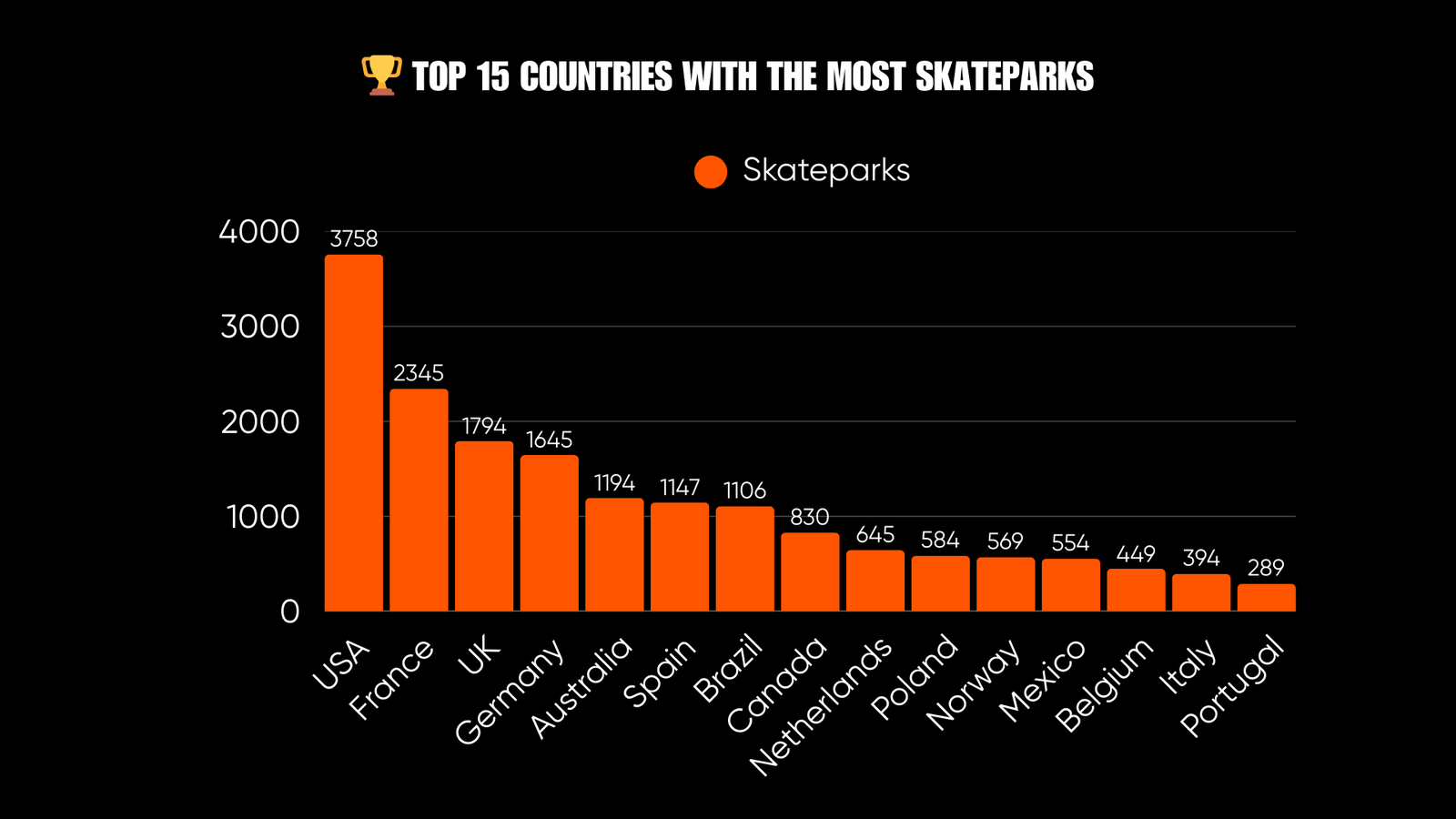
The "Big Three" Regions The graph highlights a clear three-pillar dominance in global infrastructure:
The North American Giants: The USA remains the undisputed volume leader, with a massive footprint that spans decades of development. Canada also features heavily, punching above its weight with a strong network of municipal parks.
The European Powerhouse: If you look at the chart, you’ll see that Europe is not just about one country—it’s a collective force. Germany, France, and the United Kingdom are neck-and-neck, constantly vying for the top spot in Europe. They are closely followed by nations like Spain, Switzerland, and the Benelux region (Belgium/Netherlands), where high standards of living have translated into high-density, high-quality concrete parks.
The Southern & Eastern Pillars: Brazil stands as the clear leader for Latin America, reflecting its status as a top-tier skating nation. Meanwhile, Australia and Japan anchor the scene in the Asia-Pacific region, with Japan specifically seeing a surge in new facilities post-2020.
What This Graph Tells Us Being in the "Top 15" isn't just about having the most land; it’s about policy and culture. These are the countries where skateboarding has successfully transitioned from a subculture to a public utility. The high numbers here represent successful lobbying, government investment, and a shift toward permanent concrete infrastructure that serves communities for decades.
While our global map tracks over 25,000 locations, total volume only tells half the story. The Skateparks per 100,000 Inhabitants metric reveals something far more important for the daily rider: Accessibility.
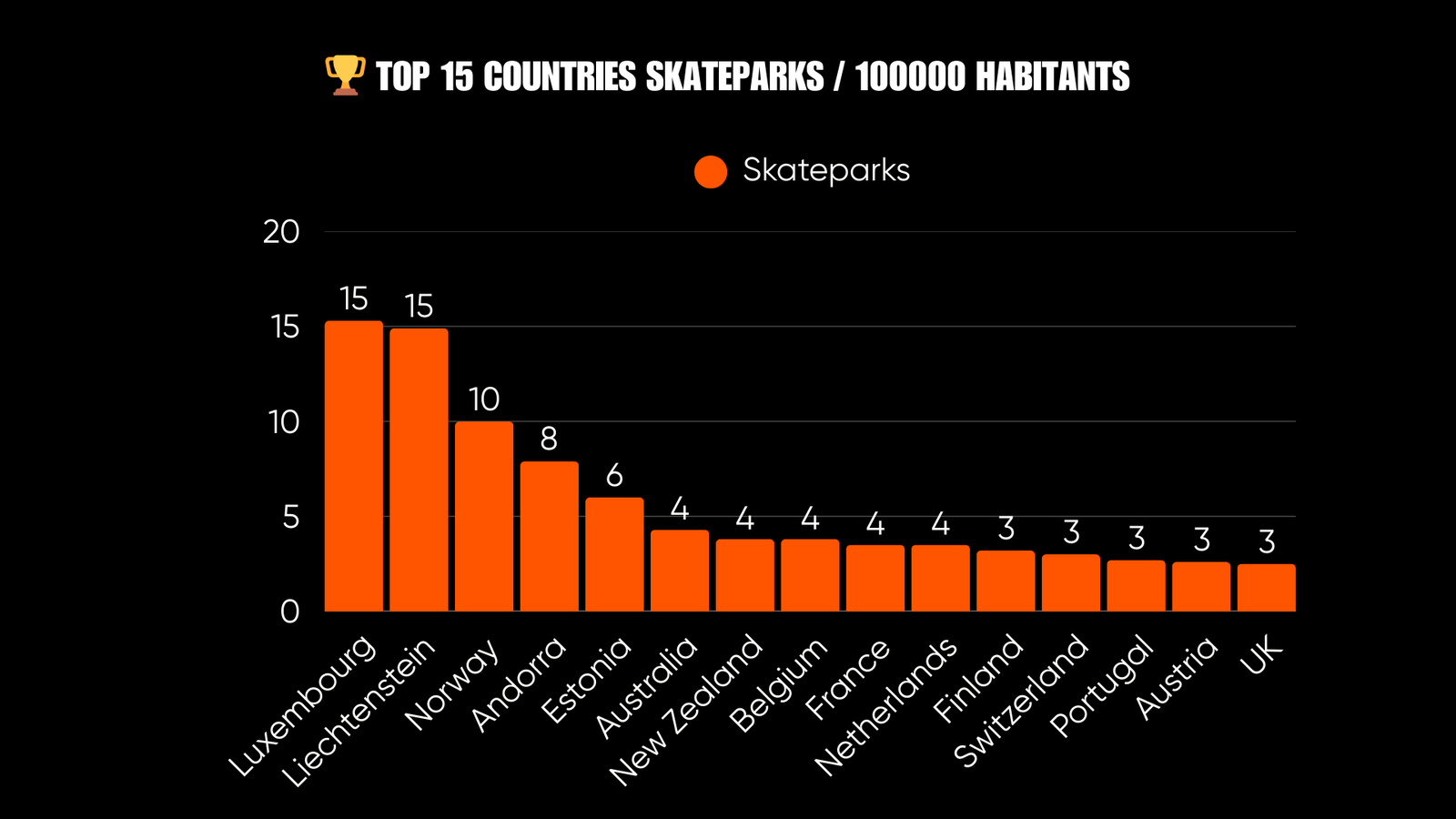
Small Nations, Big Impact - As the graph illustrates, the global leaders in skate infrastructure aren't always the largest countries. Smaller, wealthier nations—such as Switzerland, Luxembourg, Andorra, and the Nordic countries—often dominate this list. In these regions, high public investment combined with smaller populations creates a unique "saturation" where a high-quality facility is rarely more than a short train ride or push away.
What This Graph Really Shows - Being in the Top 15 of this chart signifies a crucial cultural shift: skateboarding has become a standard municipal amenity.
The "100k Benchmark" - A higher ratio here means less overcrowding at local spots and more diverse terrain available to the average rider.
Decentralization - Unlike countries where skateparks are clustered only in major capitals, the nations on this list tend to have infrastructure spread evenly across towns and villages.
The "Quality of Life" - Metric While the USA and Brazil may rule the sheer volume numbers, the countries topping this density chart offer the highest "Skateboarding Quality of Life." For a skater living in these top-tier density zones, the barrier to entry is lower, and the opportunity to ride is baked into the urban planning itself.
This visual flips the script on density. Instead of asking "how many parks do we have?", it asks a logistical question: "On average, how much territory does a single skatepark have to serve?"
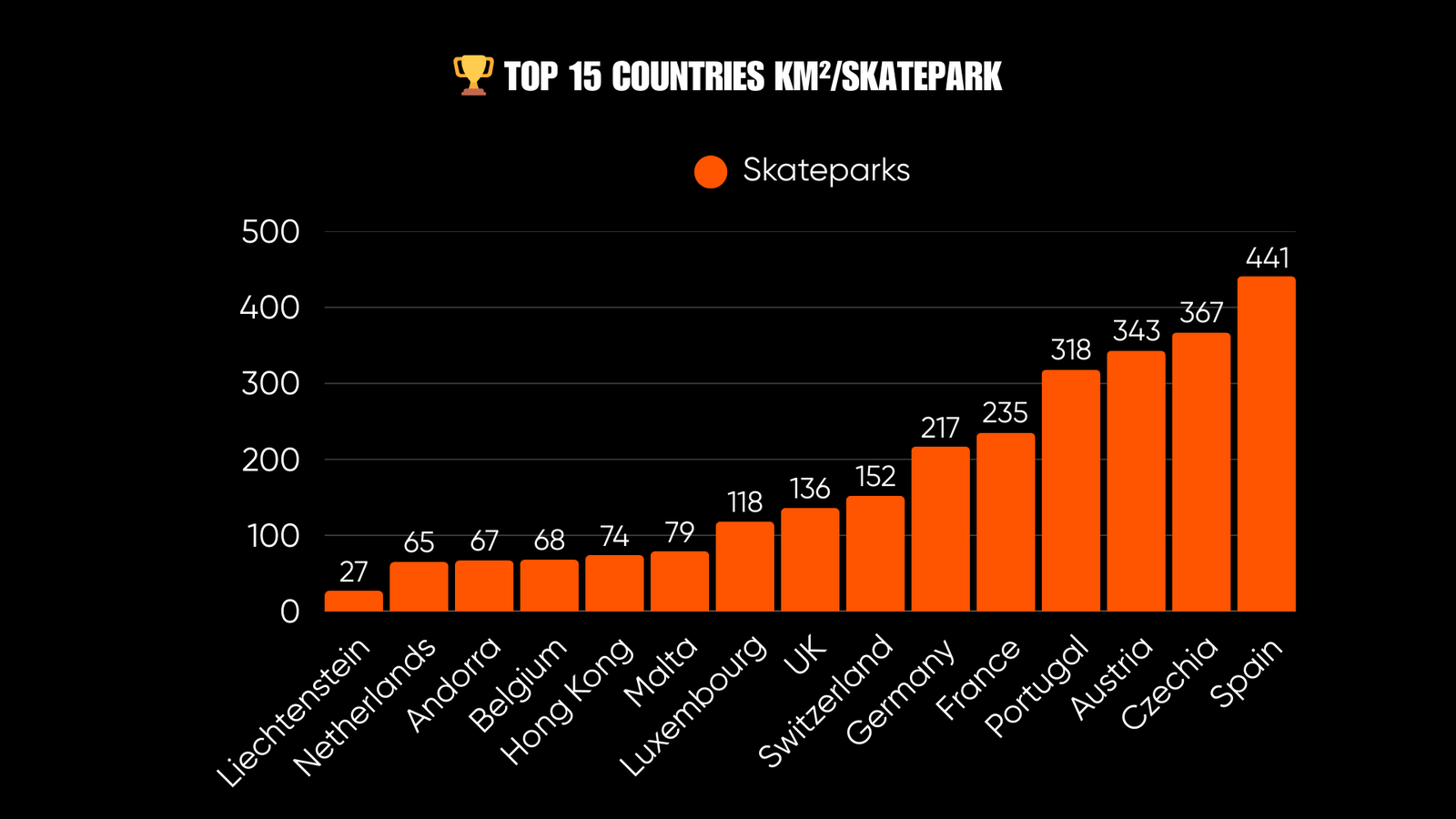
How to Read This Graph In this specific visual, a lower number is the goal.
Low Bar (Winner): A small "km² per park" means the network is tight. In countries like Belgium, Malta, or Switzerland, the physical distance between facilities is minimal, meaning you are rarely more than a short ride away from a session.
High Bar: A high number indicates that, on average, a single park is responsible for a massive geographic area. This is typical for vast nations like Canada, Australia, or the USA, where "accessibility" often requires a car and a highway.
The "Travel Gap" This metric visualizes the "travel gap"—the physical distance a rider must overcome to find infrastructure. For the countries at the bottom of this chart (the "winners"), skateboarding has achieved spatial maturity. The infrastructure is no longer a "destination" you travel to; it is a neighborhood amenity woven into the daily fabric of the country.
As we close the books on the January 2026 update, the data paints a clear picture: the era of the skatepark as a "novelty" is over. With verified facilities now mapped across the globe, we are witnessing the transition of skateboarding infrastructure into a standard utility of modern urban life.
Volume vs. Accessibility - The divide between the "Volume Giants" and the "Density Leaders" is the defining story of this update. While nations like the USA and Canada continue to dominate in raw numbers, the data from Europe (specifically the Benelux region, UK, and the Alpine nations) reveals a more mature model of accessibility. In these high-density regions, the skatepark has evolved from a "destination" requiring a car trip into a neighborhood amenity as common as a playground.
The "Concrete Standard" - Perhaps the most critical trend is the permanence of the new builds. Our tracking of the "% Concrete" metric signifies that cities are no longer looking for temporary fixes; they are investing in generational assets. The shift away from wood and modular ramps toward permanent plazas proves that municipalities now view skateboarding as a legitimate, long-term recreational investment.
Final Takeaway - The map doesn't just show us where the skateparks are; it shows us who is prioritizing play. The winners of 2026 aren't just the countries building the most parks—they are the ones building them closer, better, and more permanently. The "Travel Gap" is closing, and for the global skate community, that is the ultimate victory.
Join the Trucks and Fins community and receive exclusive news, giveaways, access to subscribers-only
-contests, discounts from our partners and much more directly from us!

Trucks and Fins is a huge present to the whole skate community - not just for the skating people, but also for shops, builders and schools. Super easy to use and can't believe how complete it is.
Pascal Lieleg aka Official Bowlshit

Trucks and Fins is a great resource for checking on local spots if you are traveling or planning a road trip! A one stop resource that is constantly updated with the newest projects as well as those bucket list locations worldwide. The intuitive UI features gps coordinates as well as useful information about shops nearby.
Architect Betonlandschaften

Our skate community has been crying out for a comprehensive guide to global skate spots. Trucks and Fins should be commended on their dedication to mapping the world's STOKE!
Maverick Skateparks

Trucks and Fins brings all of the world's skateparks to you all in one convenient place through their endless search for parks around the world. They have park locations, details, images, and more to help plan your next skate quest wherever that may take you. We appreciate their dedication and passion for skateboarding and the amazing gifts that skateparks and skate spots are.
Steve Zanco, Skatepark Respect
A big part of skateboarding is about finding Animal Chin - your spirit animal, or in other words: whatever gets you stoked. Could be the right people to roll with, or that special dream terrain. Trucks and Fins has all the best skate destinations in one place; a map of stoke in your hands.
Jan Kliewer, Yamato Living Ramps
